How to get Certified in Pilates?
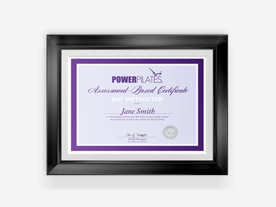
Pilates certification requirements vary widely by country. The training hours a program offers and the international standing of its credential are what actually determine whether your qualification opens doors across markets. Knowing what to look for before you enroll is the difference between a credential that travels and one that does not.
How Pilates Certification Is Structured
Certification requirements for Pilates instructors vary considerably by country. Some markets have formal requirements; others do not. What distinguishes programs from one another in any market is a combination of international recognition (whether the credential is accepted by professional studios, employers, and continuing education bodies across markets worldwide) and training hours, which are the most transparent structural measure of how much of the method a program covers.
For comprehensive programs covering mat and full apparatus, training hours are where the meaningful distinctions live. Programs under 400 hours represent an abbreviated foundation. Programs at 400 hours cover the minimum apparatus range. Programs at 450 hours meet the widely cited comprehensive threshold. Programs at 600 hours, including Power Pilates' Comprehensive Training, go further with extended apparatus depth, additional observation, and supervised teaching practice. These distinctions apply to comprehensive training; mat-only and Reformer-only programs are assessed differently and are not directly comparable on this scale.
What international recognition means in practice: A certificate from a globally operating program opens doors in New York, London, Seoul, or Bangkok without requiring bridge training or explanation. A credential that is strong in one domestic market but unknown elsewhere limits your options the moment you move, travel, or seek work internationally.
Mat vs. Comprehensive: What Each Covers
The distinction between mat and comprehensive certification is the most consequential choice you will make when entering this field.
Neither path is better in the abstract. Mat certification makes sense if you want to add Pilates to an existing group fitness career, if you intend to teach online, or if you want to establish a foundation before committing to the full comprehensive investment. Comprehensive certification makes sense if your goal is a full-time studio career with private apparatus sessions at the center of your work.
How to Evaluate a Certification Program
With wide variation in program quality across the industry, the questions below are the ones that matter most. Rigorous programs can answer all of them clearly and specifically. Use them as a filter before you commit.
Named, verifiable instructors with documented training lineage. Programs whose faculty listing is vague or unverifiable are a warning sign. You should be able to research the instructors before you enroll.
Rigorous programs assess practical teaching ability by a qualified instructor, not through automated quizzes alone. A credential issued without anyone watching you teach is a credential that has not tested what it claims to test.
Classical programs can trace their curriculum back through documented lineage to the first-generation instructors trained by Joseph Pilates. Contemporary programs should be able to articulate clearly whose research and methodology they draw on.
Programs that allow students to progress regardless of demonstrated proficiency are optimizing for completion, not competency. Gated progression, where assessment results determine whether you advance, is a structural feature of programs designed to produce teachers rather than process enrollments.
The practical test of a certification's value is whether the studios you want to work in recognize it. Ask prospective programs which studios regularly hire their graduates, and verify independently by contacting those studios.
Theory can be learned asynchronously. Cueing, adjustment, and the ability to read movement in real time cannot. Any program claiming to produce competent instructors without live instructor interaction has skipped the most important part.
What Certification Actually Costs
Cost varies significantly by program type, format, and what is included. The figures below represent typical ranges; programs at the extremes of each category exist but warrant additional scrutiny.
| Certification type | Typical cost range | Notes |
|---|---|---|
| Mat only (basic) | $300–$800 | Wide range; lower end often reflects limited contact hours or no live assessment |
| Mat, rigorous program | $800–$1,500 | Includes live assessment and structured progression; suitable foundation for studio work |
| Comprehensive (mat + apparatus) | $3,000–$8,000 | Most programs in this range include 450–600 hours across multiple formats[1] |
| Required private/semi-private sessions | Variable | Many programs require a set number of personal sessions as prerequisites; confirm this cost before registering |
Payment plans are standard at most programs. The cheapest option in any category is often cheap for a reason. Low-cost programs typically reduce faculty contact time, live assessment, or both. Those are not optional components; they are where the actual teaching competency develops.
Classical vs. Contemporary: Which Should You Choose?
This is the most consequential stylistic choice you will make in your Pilates career, and it is worth making deliberately rather than by default.
Classical Pilates preserves the original system as developed by Joseph Pilates and transmitted through his direct students: Eve Gentry, Kathy Grant, Romana Kryzanowska, Carola Trier, Ron Fletcher, and others. The exercises, their order, and the apparatus designs are preserved from the original studio. Power Pilates was established in 1995 by Howard Sichel, Phoebe Higgins, Susan Moran, and Bob Liekens. Liekens trained directly under Romana Kryzanowska in the early 1980s, and the curriculum Power Pilates built is grounded in that lineage.
Contemporary Pilates broadens and modifies the original system, incorporating research in anatomy, biomechanics, and motor learning. Both produce skilled instructors when the training is rigorous. The practical considerations when choosing are worth thinking through carefully.
Many contemporary programs are modular, meaning students certify in individual apparatuses separately over time. This has real advantages in cost and scheduling, but it can also leave gaps: an instructor who has certified on the Reformer but not yet on the Chair or Cadillac has a partial picture of the method and may find themselves improvising in situations that a more complete training would have covered. Classical programs, by contrast, tend to teach the full system as an integrated whole. Graduates enter the studio with every tool already in place, which translates to more confidence in the early years of teaching and fewer moments of uncertainty in front of a client.
The honest counterweight is cost. A full classical comprehensive program requires a substantial upfront investment that is not accessible to everyone. The choice is worth making with clear eyes about your own circumstances, rather than by default or convenience alone.
Frequently Asked Questions
Is any certification legally required to teach Pilates?
Professional studios require it, liability insurance requires it, and clients increasingly ask about it. The credential exists because the competency it represents matters to the people you serve. The practical question is not whether to certify but which certification will be recognized by the studios and markets where you intend to work.
How do I evaluate whether a program is well-regarded internationally?
Look at where the program's graduates are actually working, not just in the program's home market but in major Pilates cities worldwide. Ask whether the program's curriculum and faculty are recognized by professional studios in other countries. A program with training locations or established graduates across multiple continents is demonstrating international standing through track record, which is a more meaningful signal than any domestic accreditation label.
Can I complete Pilates certification entirely online?
Mat certification can be completed online in programs designed specifically for that purpose, provided the program includes live instructor interaction and practical assessment, not only recorded video content and written quizzes. Comprehensive apparatus certification cannot be completed entirely online because apparatus training requires physical access to equipment and supervised in-person practice. For a detailed look at what online learning can and cannot accomplish in Pilates education, see Can You Really Learn Pilates Online?
How many hours does a comprehensive Pilates certification require?
For comprehensive programs covering mat and full apparatus, the meaningful tiers are: under 400 hours (abbreviated foundation), 400 hours (minimum apparatus coverage), 450 hours (widely cited comprehensive threshold), and 600 hours (extended depth, including Power Pilates' Comprehensive Training). Programs below 400 hours should be evaluated carefully on what they omit. This scale applies to comprehensive training only; mat-only and Reformer-only programs are structured differently and are not directly comparable.
What should I ask a program before enrolling?
The most useful questions are: Who specifically will be teaching, and what is their training background? How is practical teaching competency assessed, and by whom? What is the total cost including any required private sessions or materials? Which studios regularly hire your graduates? Can I speak with a recent graduate? A program that answers all of these clearly and specifically is a different proposition from one that deflects any of them.
References & Sources
- TeamUp / GoTeamUp (2024). Best Pilates Qualifications and Training Programs. Comprehensive program costs surveyed across major providers; range $2,199–$7,600 depending on program and location. ?
Power Pilates · Est. 1995
Ready to Choose Your Program?
Power Pilates offers mat, online mat academy, comprehensive, and Reformer certifications rooted in classical lineage. Training is available in New York, Bangkok, and at partner studios worldwide.
View All Certification Programs